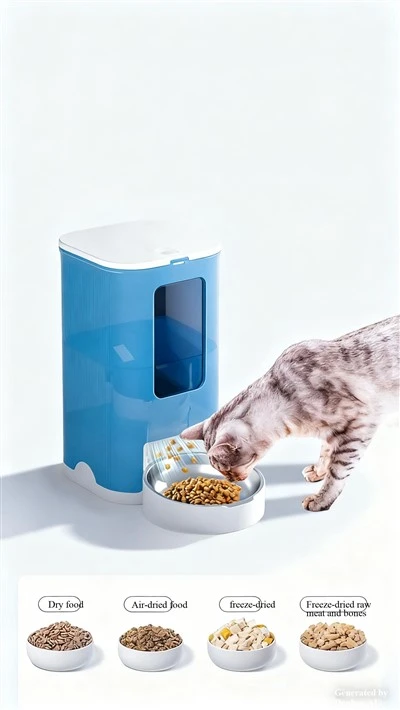
An automatic pet feeder is a device that is designed to dispense food for pets, such as cats or dogs, automatically at set times or intervals without the need for human intervention. The exact working mechanism of an automatic pet feeder may vary depending on the model and manufacturer, but generally, it operates as follows:
Food storage: The automatic pet feeder typically has a food storage compartment where the pet owner can place a certain amount of dry or wet pet food. The food is stored securely to keep it fresh and protected from moisture and pests.
Timer or schedule: The pet feeder is programmed with a timer or schedule that determines when the food should be dispensed. The pet owner can set the desired feeding times and portion sizes according to their pet's dietary needs and schedule.
Dispensing mechanism: At the scheduled time, the automatic pet feeder activates its dispensing mechanism, which can vary depending on the design. Common types of dispensing mechanisms include gravity-based systems, rotating drums, conveyor belts, or augers. These mechanisms are designed to release a predetermined portion of food from the storage compartment into a bowl or tray for the pet to access.
Power source: Most automatic pet feeders require a power source to operate, which can be a plug-in electrical outlet or batteries. Some advanced models may also have options for rechargeable batteries or have dual power sources for backup in case of power outages.
User interface: Automatic pet feeders usually have a user interface that allows the pet owner to set and adjust the feeding schedule, portion sizes, and other settings. This can be done through buttons, a digital display, or a mobile app, depending on the model.
Maintenance: Automatic pet feeders may require regular maintenance, such as cleaning the food storage compartment, dispensing mechanism, and bowl or tray to prevent food spoilage, clogging, or contamination. It's important to follow the manufacturer's instructions for proper care and maintenance.